

Hydronic Heat Pumps for Energy-Efficient Home Heating
-
Hydronic
Heat Pumps -
Why Choose
Hydronic Heat Pumps? - How It Works?
-
Installation
& Cost -
Why Total
Hydronic? -
Frequently Asked
Questions

Hydronic Heat Pumps Melbourne

Hydronic heat pumps require a closed piping network. They warm your homes by firstly heating water and then circulating it through the piping network. These pipes, fixed under your floors, release heat evenly into each room through radiators.
The heat released spreads naturally across the surfaces and keeps the floors warm. Room temperatures don’t require constant adjustments.
This system doesn’t function like the traditional electric systems. It generates heat simply by drawing heat from the outside air and transferring it into water. Australian winters may be demanding, but homes that use these heat pumps will notice better results over time.
Integrating Hydronic heat pumps into modern builds and layouts requiring renovation is easy.
Total Hydronic systems use Panasonic air-to-water heat pump technology to deliver predictable heating with no fluctuation.
Types of Hydronic Heat Pumps
The right type of heat pump will affect output and cost. Here are the different types:
Air-to-Water Heat Pumps
These are the most common options for hydronic heating because they are simple to install. They extract heat from outdoor air and transfer it into water. They function well in a wide range of conditions.
Ground Source Heat Pumps
These systems draw heat from the ground. There is no need to worry about fluctuating temperatures, as it maintains stability all year round. The upfront cost is higher because these heat pumps require excavation for installation. Usually, only larger and specialised projects opt for these systems.
Hybrid Systems
These setups are not used in residential spaces. They combine a heat pump with another heat source and are generally used for additional capacity.
Why Choose Hydronic Heat Pumps?
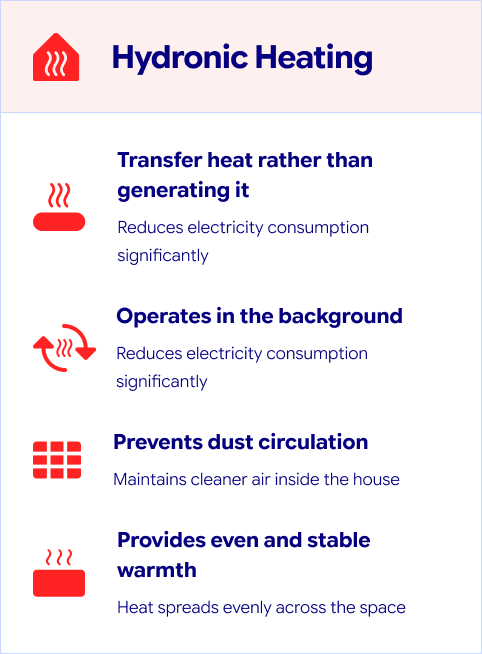
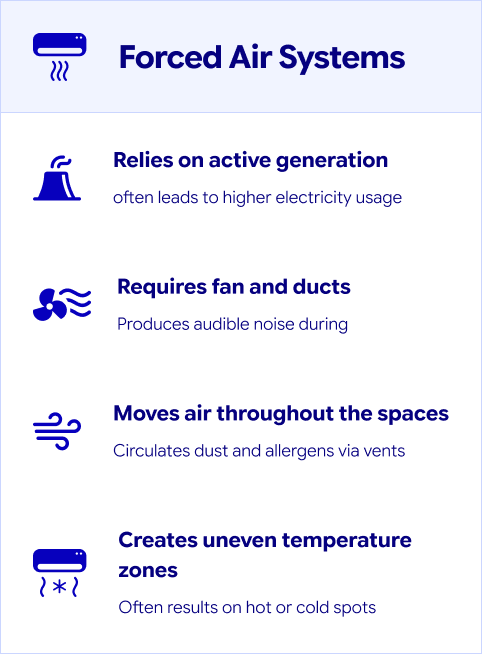
Hydronic heating solves all the issues that conventional systems come with, particularly those that rely on forced air. Here are some benefits that become more noticeable in the course of time.
-
Lower energy use
The system transfers heat rather than generating it. This reduces electricity consumption.
-
Even and stable warmth
Heat spreads evenly across space, so rooms stay warm.
-
Quiet operation
The system needs no fans or ducts and runs in the background without noticeable noise.
-
Improved indoor air quality
There is no air movement to circulate dust, which improves indoor air quality.
-
Flexible system design
These heat pumps support underfloor heating and towel rails. They can be tailored to your home setup.
-
Compatibility with solar
They are compatible with rooftop solar systems, reducing dependence on electricity.
Which heating is better for your home?
How Hydronic Heat Pump Works
How Do Hydronic Heat Pumps Work?
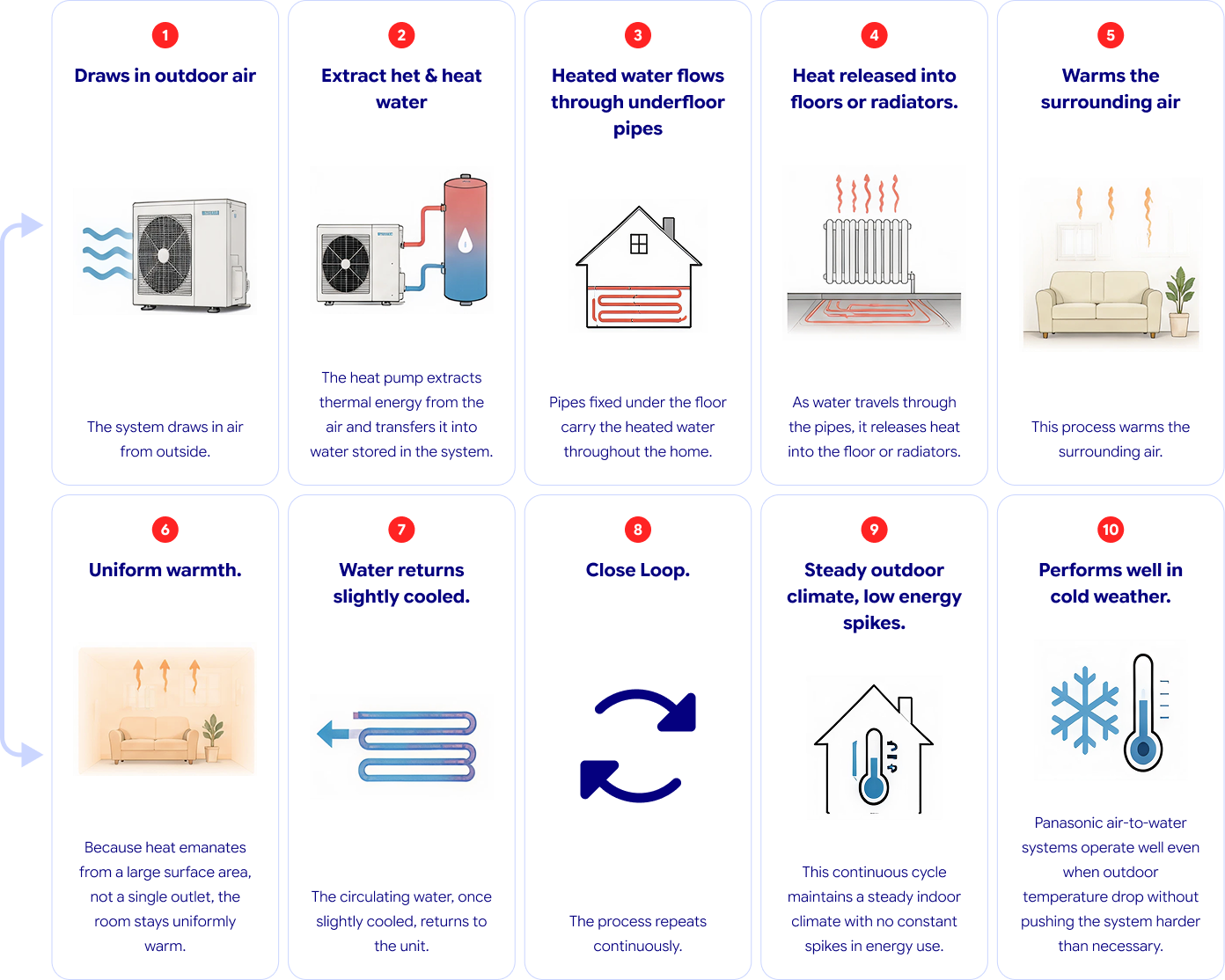
The hydronic heat pump system needs little interaction to operate. It runs on a simple, closed loop.
First, it draws in air from outside. Then, the heat pump extracts thermal energy from that air and transfers it into water stored within the system. The pipes fixed under the floor carry the heated water throughout the home. As the water travels through the pipes, it releases heat into the floors or radiators. This process then warms the surrounding air.
Because heat emanates from a large surface area, not a single outlet, the room stays uniformly warm.
The process repeats when the circulating water, once slightly cooled, returns to the unit. This continuous cycle maintains a steady indoor climate with no constant spikes in energy use.
Panasonic air-to-water systems operate well even when outdoor temperatures drop without pushing the system harder than necessary.
Installation & Cost
Hydronic Heat Pumps Installation & Cost
Installation becomes uncomplicated when there is a match between the layout and its use.
What the installation process involves
The process starts with a meticulous assessment of the property. The design must consider the floor plans and insulation levels. From there, pipework or radiator placement is mapped out. If it is a new build, then underfloor heating can be installed all across the home. But, in the case of renovations, the system may focus on specific zones or use radiators where underfloor access is limited. Lastly, the outdoor pump is installed and connected to the system.
Why Proper Installation of Hydronic Heat Pumps matters
Planning and designing are critical. Poorly planned designs result in uneven heating and higher running costs. A well-designed system doesn't fail. It keeps you warm and operates over the long term.
Compatible heating options
Hydronic heat pumps work with:
- Underfloor heating systems
- Panel radiators
- Heated towel rails
This flexibility allows the system to adapt to both new builds and existing homes.
After installation
After installation, Total Hydronic carries out system checks to confirm everything runs as planned. They monitor water flow and temperature control to see if the heat is distributed evenly across the home.
They also provide clear maintenance guidelines: what to monitor and when to schedule checks. The goal is simple: a system that runs in the background, with no constant adjustments or ongoing issues.
Energy-focused approach
Hydronic heat pumps reduce overall energy use, particularly when paired with solar. Over time, this leads to lower running costs and a more stable energy profile for the home.
Hydronic heat pumps reduce energy use. By moving heat instead of generating it, heat pumps keep electricity demand lower from the start. Hydronic heat pumps can run on self-generated power during the day when they are paired with solar. This cuts reliance on the grid and stabilises energy costs over time. There are no sharp spikes in usage anymore, and you get an easier-to-manage energy profile.
"Compared to standard electric heating, heat pumps can reduce energy use by around 70%."
Cost of Installing Hydronic Heat Pumps
Installation costs can vary based on several factors:
- The size of the home
- The type of system
- The project is a new build or a retrofit.
System integration in a new build is simpler and cost-efficient as the heat pumps are installed during construction. Retrofits, on the other hand, involve additional work, which increases installation costs.
Though the upfront investment for hydronic heat pumps is more than that of basic heating systems, lower operating costs balance that over time. The exact cost depends on the design. A tailored quote can provide the most accurate figure.
Why Total Hydronic?
Why Choose Total Hydronic for Your Heating Needs?
Total Hydronic focuses on long-term performance.
Each project starts with the home itself. It assesses the layout and insulation, followed by an inspection of how the space is used. Taking these conditions into consideration, a template is customised.
The company works with Panasonic heat pump technology, known for solid performance and suitability for Australian conditions. Therefore, the system excels across every climatic condition and home type.
Total Hydronic manages the full process. That is, from system design and product supply to installation and ongoing support. This reduces gaps between stages and keeps the project aligned from start to finish.
Their background in residential and commercial projects allows them to provide solutions that perfectly adapt.
When paired with solar, heat pumps can be up to 90% cheaper to run compared to gas systems.
Frequently Asked Questions
What are hydronic heat pumps?
Hydronic heat pumps are used for heating homes. They heat water and circulate it through pipes installed under floors or within radiators. When the water travels through pipes, it releases heat into each room. It differs in the technology. Rather than pushing hot air through vents, it creates a steady indoor temperature. It avoids cold spots and keeps the room cosy and warm.
Are they energy-efficient?
They are truly energy efficient. Hydronic heat pumps transfer heat from the air into water instead of generating it. This reduces electricity use. Because they use less power, they are different from conventional electric systems. But in terms of performance, they are better. Efficiency is higher when these heat pumps combine with solar. It further reduces running costs while maintaining stable indoor comfort throughout the colder months.
What are the main benefits?
Hydronic systems distribute heat evenly without using forced air. They do not make noise and also reduce airborne dust. Their installation is flexible because they depend on underfloor heating or radiators. These heat pumps are practically beneficial because they use less energy and have even lower ongoing operating costs.
How do they compare to traditional heating systems?
They are different in terms of practicality and benefits. They are not like ducted or split systems that rely on moving air. Instead, it heats surfaces. This creates a more stable and even temperature throughout the room. This avoids hot and cold zones and reduces noise, even during longer heating periods common in Australian winters.
Can hydronic heat pumps be used for underfloor heating?
Yes. Underfloor heating is one of the most effective ways to use a hydronic system. When warm water flows through pipes under the floor, heat rises evenly above and heats the space. It is popular in many modern Australian homes because these heat pumps provide comfort without visible hardware or noticeable drafts.
What is the cost of installing a hydronic heat pump in Australia?
Installation costs vary all the time. This is because they depend on the size of the home, system design, and whether the house is a new build or retrofit. Generally, new builds are cost-effective, while retrofits require additional work. Upfront costs may be higher, but the lower running costs offset this over time.
How long does it take to install a hydronic heat pump?
It definitely depends on the size and complexity of the project. In new builds, the system integrates during construction and follows the build schedule. But, in existing homes, installation may take several days to a few weeks. It also depends on whether underfloor heating or radiators are used.
Are hydronic heat pumps environmentally friendly?
Hydronic heat pumps are a good option if you are environmentally responsible. They use less energy because they transfer heat rather than generate it. This reduces overall electricity consumption and lowers emissions. More importantly, it can also use solar power. These systems support the shift towards cleaner, all-electric heating solutions.
What factors should I consider when choosing a hydronic heat pump?
There are some important factors that you must consider, such as the size and layout of your home, insulation quality, and whether the project is a new build or retrofit. You should also consider how the system will be used: underfloor heating, radiators, or a combination—and whether it will integrate with solar or other energy systems.
Why should I choose Total Hydronic for my heating needs?
The residential 6 kW CO2 heat pump unit be combined with different size storage tank. The storage tank size includes 160L, 250 L, 315 L, and 400 L. There is a Stainless Steel storage tank – available in two variations – Tall and Squat, suitable for all non-high mineral, or bore water applications; or a Glass Lined Enamel tank, suitable for all water types, including high mineral and bore water.
How does a CO2 Heat Pump Hot Water System work?
Total Hydronic never uses a standard setup for every space it designs. It designs each system based on the specific home. They work with proven Panasonic technology and manage the full process, from design to installation and support. This approach never fails and performs as intended, suiting the layout and requirements.
What maintenance is required for hydronic heat pumps?
Hydronic systems hardly require a lot of maintenance. But it does require periodic checks to see if it is running well, including inspecting components and confirming water circulation. There are no filters or air ducts to manage in these heat pumps, so there is reduced ongoing maintenance compared to many traditional heating options.
Are hydronic heat pumps suitable for all types of homes?
It suits most homes, although the design will vary. New builds are easier because they can go with full integration, while existing homes may use radiators or partial underfloor heating. A proper assessment of the layout and structure determines the most suitable setup for each property.
What is the lifespan of a hydronic heat pump system?
A well-designed and properly installed hydronic heat pump system can last more than 15 to 20 years. The lifespan of these heat pumps depends on system quality and basic maintenance. Panasonic units maintain performance even after years. Always remember to service the system correctly.
Can hydronic heat pumps be integrated with existing heating systems?
Most of the time, yes. Hydronic heat pumps can integrate with existing radiator systems, as an upgrade. Firstly, an assessment should be carried out to verify the level of integration and the current condition of the system so that no incompatibility issues arise in the future.
What are the most common issues with hydronic heat pumps, and how are they resolved?
Most issues are poor system design and incorrect installation. Usually, there are no problems with the technology itself. Problems such as uneven heating or reduced efficiency can be traced back to layout or setup.
Conclusion
Hydronic heat pumps are steady systems that keep your home warm even in the coldest Australian winter. They are low noise and integrate well with modern builds. They are best suited for Australian conditions and run alongside solar, all while using less energy.
Total Hydronic matches each system with your home and supports it with proven Panasonic technology.
Get a tailored quote and see how hydronic heating can work for your space.